
Solutions
As the Internet of Things (IoT) advances toward the era of Industry 4.0 and digital transformation, “location information” has emerged as the pivotal link connecting the virtual and physical worlds. Among the myriad wireless positioning technologies available, Ultra-Wideband (UWB) stands out; leveraging its nanosecond-level pulse characteristics to achieve centimeter-level positioning accuracy, it has rapidly expanded beyond its early military applications into the realms of smart manufacturing, smart healthcare, and consumer electronics.
However, UWB is not a monolithic technology; rather, it encompasses a variety of complex positioning modes. The critical question lies in how to select the most suitable mode for a specific application scenario: should one opt for the high-capacity TDOA, the highly robust TWR, or the architecturally simplified PDOA? This article delves deep into the technical intricacies, comparative advantages and disadvantages, and underlying engineering considerations associated with each of these modes.
You have the option to develop a solution in-house or select a third-party vendor’s offering—so why choose us? Please click here to find out.
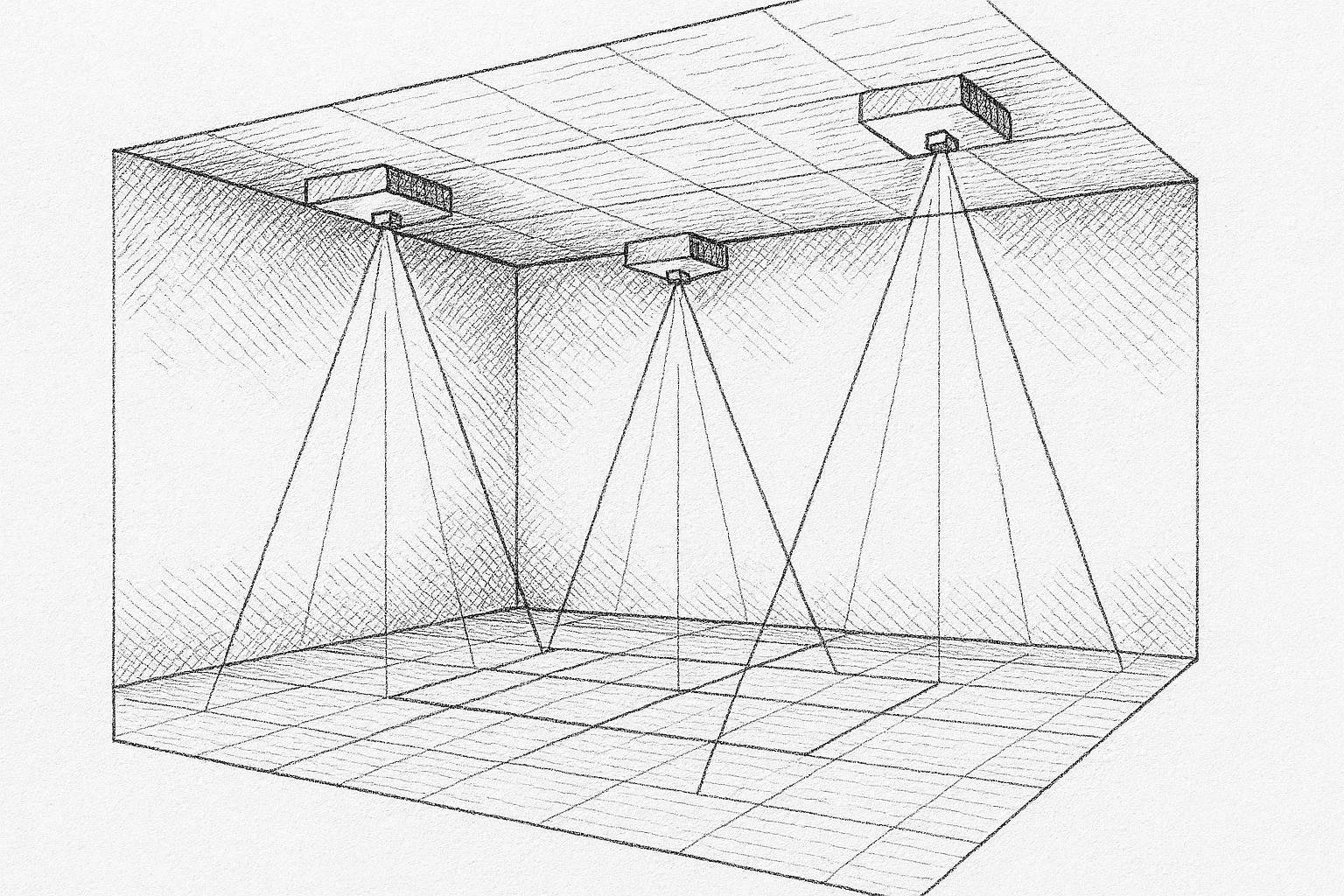
Introduction to UWB Positioning Modes
As the Internet of Things (IoT) advances toward Industry 4.0 and digital transformation, location has become a critical…
UpLink TDOA
Financial accounting (or financial accountancy) is the field of accounting concerned with the summary, analysis and…
DownLink TDOA
Financial accounting (or financial accountancy) is the field of accounting concerned with the summary, analysis and…
PDOA
Our tax preparation accounting service offers a reliable and efficient solution for individuals and businesses seeking…
DS TWR (TOF)
Business Advisory is a specialized account service that offers expert guidance and strategic support to businesses.…

